Symptoms of a skin abscess
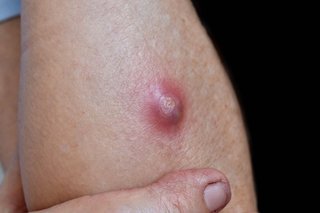
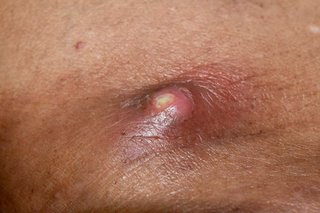
A skin abscess is a lump or swelling on your skin that contains pus. There are different types and they can appear anywhere on your body.
A skin abscess may feel painful and warm. The middle of the lump may feel soft when touched.
Pus may leak from the abscess and you may also have a high temperature.
On white skin, an abscess will often appear red. The colour of an abscess may be harder to see on brown and black skin.
When and where to get medical help
Some skin abscesses go away by themselves, but it’s important to know when to get medical help.
Non-urgent advice: See a GP if you have:
- a lump that is getting bigger
- a lump that is hard and does not move
- a lump or swelling in your breast
- a lump and you have a weakened immune system or a long-term condition such as diabetes
- a lump anywhere on your body that does not go away, or you are worried about
A GP can check what could be causing the lump and if you need treatment.
Urgent advice: Ask for an urgent GP appointment or get help from NHS 111 if you have:
- a lump that is painful, red or hot, or you feel hot, cold or shivery
- swelling or redness spreading away from the lump – the redness may be harder to see on brown or black skin
You can call 111 or get help from NHS 111 online.
Treatments for skin abscesses
Treatment for a skin abscess will depend on what type of abscess you have.
The abscess may need to be drained to get rid of the pus. This usually involves a small operation to make a cut in the skin which will allow the pus to drain. You may be given a local anaesthetic so you do not feel any pain when the abscess is drained.
You may also be given antibiotics after the surgery if the abscess is infected.
Smaller abscesses that do not contain much pus may be treated with antibiotics instead of surgery.
Causes of skin abscesses
Skin abscesses are usually caused by an infection.
It's normal to have bacteria on your skin without it causing an infection. However, bacteria can sometimes get into your skin, for example through a cut or along a hair follicle. This can cause pus to form, creating an abscess.
You may be more likely to get skin abscesses if you:
- smoke
- are living with obesity
- have diabetes
- are between 15 and 40 years old
- have a skin condition or inflammation such as eczema
Page last reviewed: 13 October 2026
Next review due: 13 October 2029